Manufacturing & regulation
How are peptides made? A conceptual guide
Most peptides used today are built one amino acid at a time on a solid support, then purified and freeze-dried. Here's what that process actually involves, in plain terms, and why it's specialized work rather than a weekend project.
For research use only. VendorVerify sells nothing and takes no money from vendors. No affiliate links, no coupon codes, no paid rankings. How scores work
Key facts
- Bruce Merrifield published solid-phase peptide synthesis in 1963 and received the 1984 Nobel Prize in Chemistry for developing methodology for chemical synthesis on a solid matrix.
- If each coupling step in a peptide synthesis runs at 99% efficiency, a 10-step synthesis yields roughly 90% full-length product and a 50-step synthesis closer to 60%.
- Semaglutide's peptide backbone is produced by yeast fermentation and then modified with a hydrophilic spacer and a C18 fatty di-acid, according to the Ozempic prescribing information.
- A 30-amino-acid peptide made by solid-phase synthesis needs roughly 30 coupling cycles run in sequence, one for each amino acid added to the chain.
- Most peptides, including the research compounds VendorVerify tracks, are made by solid-phase synthesis, then cleaved from the support, purified by preparative HPLC and freeze-dried.
Most peptides on the market today, including the research-labeled compounds we track, are made by a method invented in the early 1960s: solid-phase peptide synthesis, or SPPS. The core idea is simple to describe and genuinely difficult to execute well, and that gap — simple concept, hard execution — is a big part of why lab-tested vials of the same peptide vary as much as they do.
This article explains, conceptually, how peptides are made: the solid-phase method, why longer or more complex sequences are harder to produce cleanly, and the recombinant and hybrid approaches used for some longer peptides. It also answers directly whether you can make your own. Nothing here is a set of instructions — no reagents, quantities, conditions, or equipment lists. It's an explanation of what the named steps are and why each one is hard, not a recipe for doing them.
Solid-phase peptide synthesis: the basic idea
A peptide is a chain of amino acids linked end to end. Solid-phase peptide synthesis builds that chain one amino acid at a time, working backward from what will become one end of the finished molecule, while the growing chain stays chemically anchored to a solid support — originally a small resin bead — throughout the whole process.
The method was developed by Bruce Merrifield, who published the method in 1963; he received the 1984 Nobel Prize in Chemistry "for his development of methodology for chemical synthesis on a solid matrix" (Nobel Prize biographical page; Rockefeller University). Before Merrifield's innovation, peptides were built in solution, purifying the growing chain after every single addition — slow, and lossy at every step. Anchoring the chain to a solid support instead meant reactions could be pushed toward completion and unreacted material simply washed away, with the growing peptide staying put through the wash. That single change is what made routine, scalable peptide manufacturing possible; automated peptide synthesizers used across the industry today are a direct descendant of it.
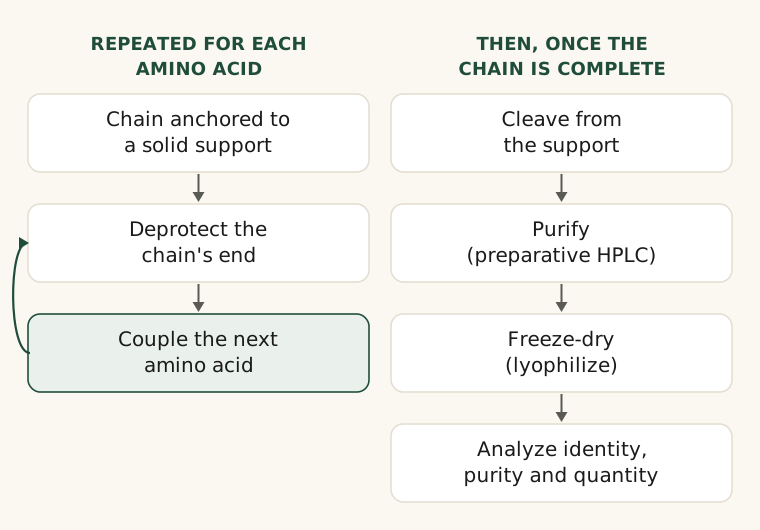
The named steps, conceptually
Chain assembly. Each amino acid added to the growing chain requires its own cycle: temporarily unmasking the reactive end of the chain so the next amino acid can attach, then joining that next amino acid onto the chain, then repeating for the next position. This repeats once for every single amino acid in the target sequence — a 30-amino-acid peptide needs roughly 30 of these cycles run in sequence, each one needing to work almost perfectly for the next one to have anything clean to build on.
Cleavage. Once the full sequence has been assembled on the solid support, the finished chain has to be released from that support and have any remaining protecting chemistry removed, leaving the free peptide in solution.
Purification. No cycle in chain assembly is perfect. Some fraction of chains fail to react at a given step, some react at the wrong position, and some pick up side products — so the material coming off the solid support after cleavage is a mixture of the correct full-length peptide alongside shorter, incomplete, or otherwise incorrect sequences. Separating the target peptide from that mixture is done by preparative high-performance liquid chromatography (HPLC), which separates molecules based on how they interact with a column as a solvent moves through it — collecting the fraction of eluate that corresponds to the correctly assembled peptide and discarding the rest.
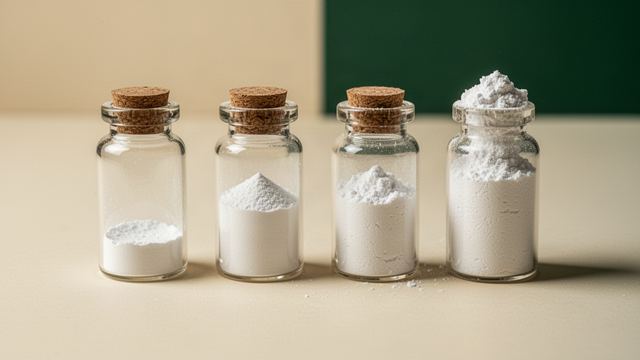
Lyophilization. The purified peptide, now in a liquid solvent, is freeze-dried — lyophilized — into a stable powder for storage and shipping. This is the powder actually visible in a vial.
Analysis. Before a batch is called finished, it's tested: mass spectrometry or similar methods to confirm identity (is this actually the intended sequence), HPLC to quantify purity, and additional testing depending on intended use — the same category of tests described in our companion article on what a peptide API is and how it's specified.
Why length and sequence make manufacturing harder
Chain assembly is a chain of dependent steps, and the mathematics of that is unforgiving. If each individual coupling step in a synthesis runs at, say, 99% efficiency — already a very good result — the yield of fully correct, full-length peptide falls off multiplicatively as the number of steps grows: a 10-step synthesis at 99% per step yields roughly 90% correct full-length product, but a 50-step synthesis at that same per-step efficiency yields closer to 60%, and a 100-step synthesis drops further still. That's before accounting for the fact that per-step efficiency itself tends to fall as chains get longer, not stay constant.
Longer and more complex peptide sequences also run into a specific chemical problem: as chains grow, they can start folding onto themselves and clumping together on the solid support — a phenomenon generally described as aggregation — which makes the next coupling step less complete than it would otherwise be, compounding the yield problem described above. Certain amino acids and repetitive stretches in a sequence are especially prone to triggering this. The practical consequence, described across peptide-manufacturing technical literature, is that longer and more complex peptides come off the synthesis with a higher proportion of "deletion" sequences — chains missing one or more amino acids — and other closely related impurities that purification then has to separate out (overview of aggregation challenges in SPPS; peptide purity/yield discussion). None of this is a flaw in a particular manufacturer — it's an inherent property of building a long chain step by step, and it's a direct part of why purification is as important, and as difficult, as assembly itself.
Recombinant and hybrid routes for some longer peptides
Solid-phase synthesis isn't the only route to a finished peptide, and for some longer or more complex molecules it isn't even the primary one. Recombinant production — using genetically engineered organisms to manufacture a peptide biologically rather than assembling it chemically — is well established for larger peptides and proteins.
Semaglutide is a documented example. Its U.S. prescribing information says "the peptide backbone is produced by yeast fermentation," and that the molecule is then modified, including a hydrophilic spacer and a C18 fatty di-acid attached at one position, which is what lets it bind to albumin and last longer in the body (Ozempic prescribing information, section 11, via DailyMed). That's a genuinely different manufacturing category from solid-phase synthesis: a living organism produces the base chain, and chemistry finishes it. The two approaches aren't mutually exclusive.
A third, hybrid category also exists for some longer peptides: chemical ligation methods join two or more separately produced peptide segments into one longer chain, sometimes combining a chemically synthesized segment with a recombinantly produced one. The point of mentioning these routes isn't to suggest they're common for every peptide (solid-phase synthesis remains the standard route for most of what shows up in this market) but to be accurate that it isn't the only manufacturing category that exists.
Can you synthesize your own peptides?
Technically, yes — with the right training, equipment, and materials, peptide synthesis happens in real laboratories every day. It requires formal training in organic or peptide chemistry to run a synthesis competently and recognize when a step hasn't gone to completion; hazardous reagents and dedicated equipment — for the reaction itself, for preparative HPLC purification, and for analytical testing — handled with proper safety controls; and the ability to verify the result, since without analytical testing there's no way to know whether a self-made batch is the intended peptide at usable purity or a mixture of deletion sequences and side products. Legal and regulatory considerations also vary by jurisdiction and substance, which is a separate question from the chemistry; this isn't legal advice.
That's why this isn't a how-to: it's specialized laboratory work, not a home project, and this article isn't providing the missing details to make it one.
Why all of this shows up in the vials we track
Every step described above is a place where a batch can end up slightly different from another batch, even from the same manufacturer, even of the same nominal product — which is part of why lab-tested vials of the same compound don't all measure the same. A vial that measures low against its label isn't necessarily evidence of deliberate underfilling; it can also reflect where a batch landed after cumulative yield losses through assembly and purification, or simply how a specific fill was executed. A vial that measures high can reflect overfill built in precisely because yield losses are expected. None of that excuses a vendor from accurate labeling, and it's exactly why independent testing — not assumptions about the manufacturing process — is what tells you what a specific vial actually contains. Our tirzepatide test results article shows what that spread looks like in practice, across hundreds of independently tested vials of a single compound.
We don't manufacture or test anything ourselves — every number on this site comes from an independent lab's report, most of them paid for by buyers. You can see results for tested vendors on our vendor ratings, read our methodology, or submit a report of your own.
This isn't legal advice. Historical and technical statements above are drawn from the cited sources as of September 28, 2026.
Frequently asked questions
How are peptides made?
Most peptides are made using solid-phase peptide synthesis: amino acids are joined one at a time to a growing chain that stays anchored to a solid support throughout the process, then the finished chain is cleaved from that support, purified by preparative HPLC, and freeze-dried into the powder found in a vial. Some longer peptides are instead produced by engineered cells (a recombinant process) or by joining separately made segments together.
How difficult is it to manufacture peptides?
It ranges from routine to genuinely difficult depending on the peptide. Short, simple sequences can be assembled with high efficiency at every step. Longer or more complex sequences are harder because manufacturing is a chain of dependent reaction steps: even a small per-step inefficiency compounds across dozens of steps, and longer chains are also more prone to a folding/clumping problem called aggregation that further reduces how much correctly assembled peptide comes out at the end.
Can you synthesize your own peptides?
Technically, peptide synthesis happens in trained laboratories every day, but it isn't a home or hobbyist project, and this isn't a how-to. It requires specialized chemistry training, hazardous reagents handled with proper safety equipment, dedicated purification and analytical instruments to verify the result, and attention to legal and regulatory considerations that vary by jurisdiction — none of which we're providing instructions for here.
Who invented solid-phase peptide synthesis?
Bruce Merrifield developed solid-phase peptide synthesis, publishing the method in 1963. He received the 1984 Nobel Prize in Chemistry for developing this methodology, which anchors a growing peptide chain to a solid support so each amino acid can be added and unreacted material washed away without losing the chain.
Are all peptides made the same way?
No. Most peptides, including most of what's tested in the research market we track, are made by solid-phase chemical synthesis. Some longer peptides are instead produced using genetically engineered cells that manufacture the peptide biologically — semaglutide's peptide backbone, for example, is produced by yeast fermentation — and some use hybrid methods that chemically join separately produced segments together.
Why do some peptide vials test differently from others of the same compound?
Manufacturing a peptide involves many sequential steps, each with some inefficiency, plus a purification step that separates the correct peptide from byproducts of that process. Batches can land differently as a result, and how a specific batch was filled into vials adds another source of variation. That's part of why independent lab testing of a specific vial, rather than assumptions about manufacturing, is what actually shows what's inside it.